


Data centers are powering Finland’s next phase of growth and creating a new field of expertise
Homes
Business premises
Construction services
YIT Finland
The world’s largest seasonal thermal energy storage facility is being excavated in the bedrock beneath Vantaa. Vantaa Energy’s Varanto project demonstrates how complex energy transition projects are delivered: through seamless collaboration among project development, rock construction, building systems, and project management.
100 meters beneath Vantaa, Finland, drilling rigs are advancing through three parallel caverns, each approximately 300 meters long, 40 meters high, and 20 meters wide. When excavation is completed, currently estimated for summer 2028, the bedrock will contain a seasonal thermal energy storage facility with a volume of 1.1 million cubic meters. Water as hot as 140°C will be pumped into the facility, and its capacity of 90 gigawatt-hours would be enough to heat a mid-sized Finnish city for up to a year.
“Varanto plays a significant role in achieving the City of Vantaa’s climate goals and is also a central part of Vantaa’s future district heating system. Varanto will improve the city’s energy system efficiency by storing summer heat for the winter, heat generated as a byproduct of waste treatment, electrically produced heat when electricity prices are low, and waste heat. The Varanto concept has evolved along the way. In addition to energy storage, the facility will include a major electric district heating plant, thanks to two electric boilers located at Varanto. They will provide much-needed flexibility for Finland’s electricity system,” says Kalle Patomeri, Executive Vice President, Energy Business at Vantaa Energy.
The approximately €300 million project is expected to generate nearly 800 person-years of employment during construction and is scheduled for completion in 2030.
It is rare and a privilege to help deliver a project with such a significant impact on the transformation of the energy system.
Ville Nupponen, Site Manager
“For the excavation contractor, Varanto is exceptional above all because of its scale. It is rare and a privilege to help deliver a project with such a significant impact on the transformation of the energy system,” says Ville Nupponen, Site Manager at YIT.
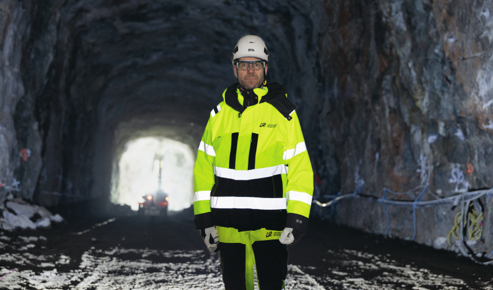
“Varanto plays a significant role in achieving the City of Vantaa’s climate goals and is also a central part of Vantaa’s future district heating system,” says Kalle Patomeri, Executive Vice President, Energy Business at Vantaa Energy.
The energy transition is accelerating Finland’s construction industry, and Varanto is a visible example of this shift. Investments are focusing particularly on power grids, battery storage, solar and wind power, and data centers. According to the Confederation of Finnish Industries, more than 1,250 clean transition projects are in the pipeline, with a combined value exceeding €300 billion.
“This is a massive transformation already underway, reshaping the entire construction industry. Energy construction brings together different areas of construction on an exceptionally broad scale,” says Santtu Mankki, Director of Project Development for Data Center and Industrial Construction at YIT.
According to Mankki, the foundation for a successful project is laid before construction begins because the delivery model and costs are effectively determined during the development phase. YIT has also helped define the framework for Varanto.
Careful project development reduces risks, accelerates delivery, and improves the profitability of the overall investment.
Santtu Mankki, Director of Project Development
“Careful project development reduces risks, accelerates delivery, and improves the profitability of the overall investment. It requires an understanding of the construction process as well as expertise in permits, regulatory requirements, and grid connections. Consistent project management from development through delivery is essential for controlling schedules and costs and managing zoning, permitting, and connection-related issues.”
Building systems must also be addressed early. Energy projects involve high power levels, and electrical, heating, cooling, automation, and security systems must work seamlessly together as part of the broader energy infrastructure.
“When assessing project feasibility, it is essential to confirm, among other things, that the site has sufficient electrical capacity and that waste heat can be recovered. Building systems control energy flows and have a significant impact on a project’s life-cycle costs,” says Juho Siitonen, Executive Vice President responsible for Building Systems and Property Management at YIT.
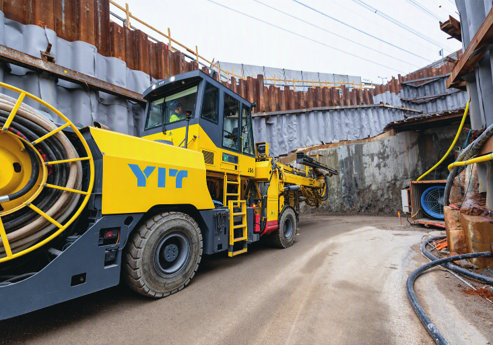
At the Varanto site, particular attention is paid to groundwater monitoring, seepage control, precise drilling and blasting design, and vibration management. Rock transportation and work phases must also be carefully sequenced.
Energy solutions are increasingly being located underground. Rock caverns free up valuable land, strengthen security of supply, and save energy because, at a depth of just 30 meters, the bedrock remains at a steady 8–10°C year-round.
“Finland’s bedrock is well suited to this, thanks to several ice ages that removed softer rock types. With our experience, advanced automation, and equipment fleet, we are among the world leaders in hard-rock excavation,” says Kari Korhonen, Project Development Manager at YIT.
At Varanto, this expertise is being tested in a new way. Cracks and fractured zones in the bedrock are sealed by grouting, and the caverns are reinforced with rock bolts to exacting standards because temperature fluctuations place stress on the materials.
No comparable facility operating at these temperatures has ever been built. Because it is unique, it has been modeled extensively.
Kari Korhonen, Project Development Manager
“No comparable facility operating at these temperatures has ever been built. Because it is unique, it has been modeled extensively,” Korhonen says.
At the site, particular attention is paid to groundwater monitoring, seepage control, precise drilling and blasting design, and vibration management. Rock transportation and work phases must also be carefully sequenced.
“This is not just about excavation. It is a complete operation combining geological control, design, production management, safety management, environmental impact management, and logistics. The excavation contract has progressed as planned, and production volumes continue to increase,” Nupponen says.
Energy projects are characterized by long lead times and the need to coordinate multiple parties. Plans are often completed in sections as production advances.
“The client’s needs may determine the schedule: a specific piece of equipment or space may need to be put into service before the rest of the building. Open communication about goals and milestones keeps everyone on the same side of the table,” says Teemu Lahti, Project Director at YIT.
The same principle is evident in day-to-day work at the Varanto site.
“Not every situation can be anticipated, so solutions are developed together with the client and designers in the best overall interests of the project. The most important lesson has been how decisive the integration of different areas of expertise is in a project of this scale,” Nupponen says.
Mankki sees Varanto as an example of where energy transition projects are headed.
“We bring expertise to every phase of a project, from development and delivery to maintenance. When we manage the entire life cycle, we can recommend the right delivery models, and the project is completed on schedule or even ahead of it.”
Vantaa’s Varanto is one of the clearest examples of how the energy transition is moving from goals to built infrastructure. Once completed, the world’s largest seasonal thermal energy storage facility will address the challenge of storing renewable energy and enable the use of waste heat and variable renewable energy.
Varanto - The Cavern Thermal Energy Storage - Vantaan Energia
Originally published in Tekniikka & Talous, advertising supplement, October 16, 2026.


